
USB Device Not Recognized? Troubleshooting USB Extenders and KVM Systems
A USB device may work normally when connected directly to a computer but stop working after a USB extender or KVM system is added.


As technologies are developing constantly, electronics are widely used in every corner of our life. However, more electronics also cause higher possibilities of being damaged. This implies that there will be big losses not only for residential electronics but even greater for commercial ones.
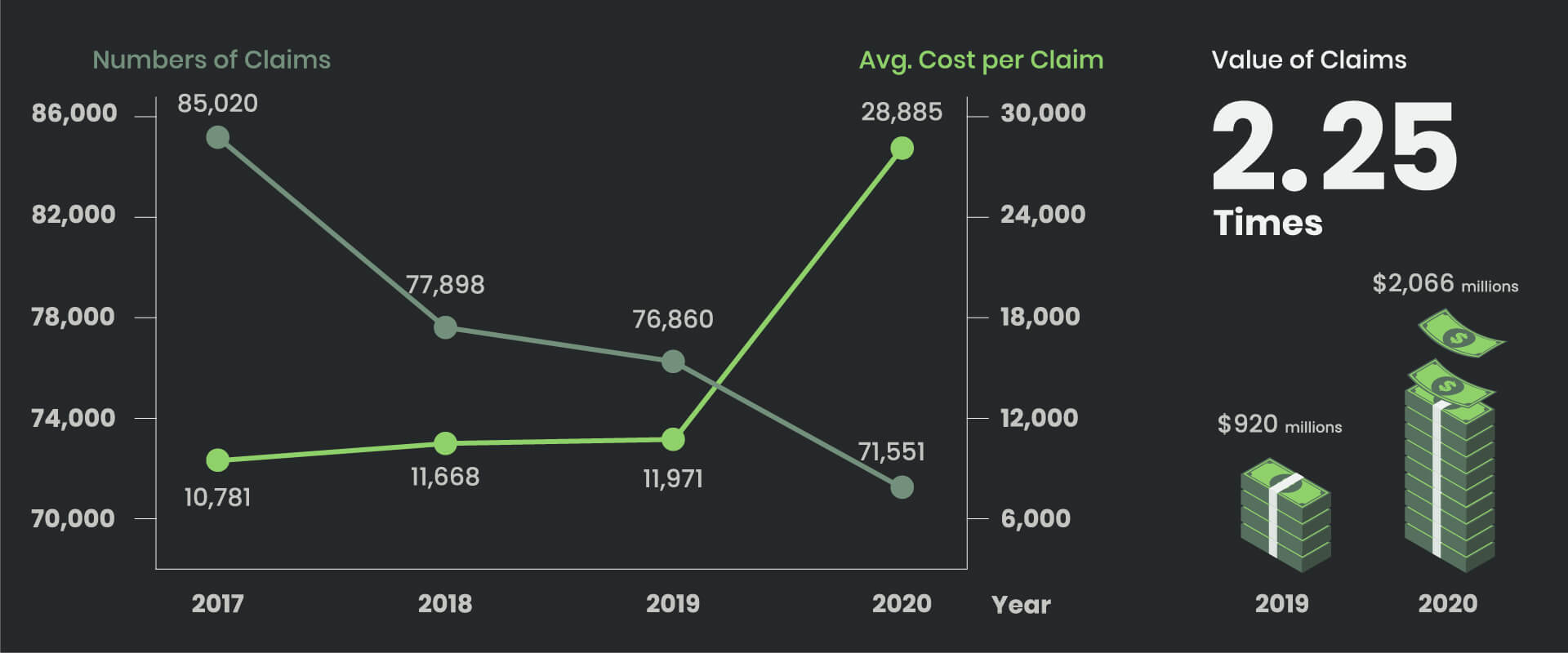
According to Insurance Information Institute, 2020 Insurance claims for household properties exceeded 2 billion dollars which increased by 225% compared to 2019's 920 billion USD.
However, 2020 had fewer insurance claims (71,551) and an average of 28,885 USD per claim, compared to 2019's 76,860 insurance claims and an average of 11,971 USD per claim. This suggests technological advancement also makes people pay a higher price for electronics.
Although it's a study for households, we can expect that the money paid on the insurance claims might be even greater for the enterprise and government-owned properties due to the much more advanced technologies applied.
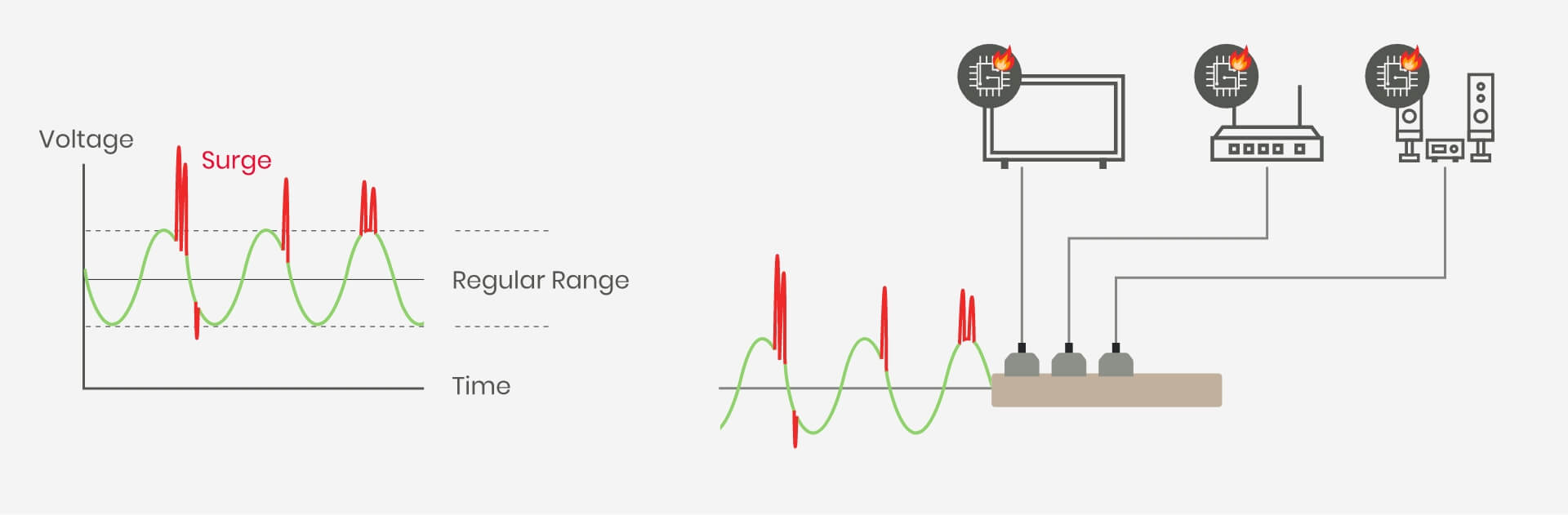
Lighting could transmit over cables of ethernet, phone line, television or distribution board, even through power socket. There are lots of electrical devices that use IC chipset would damage by voltage overload caused by the surge.
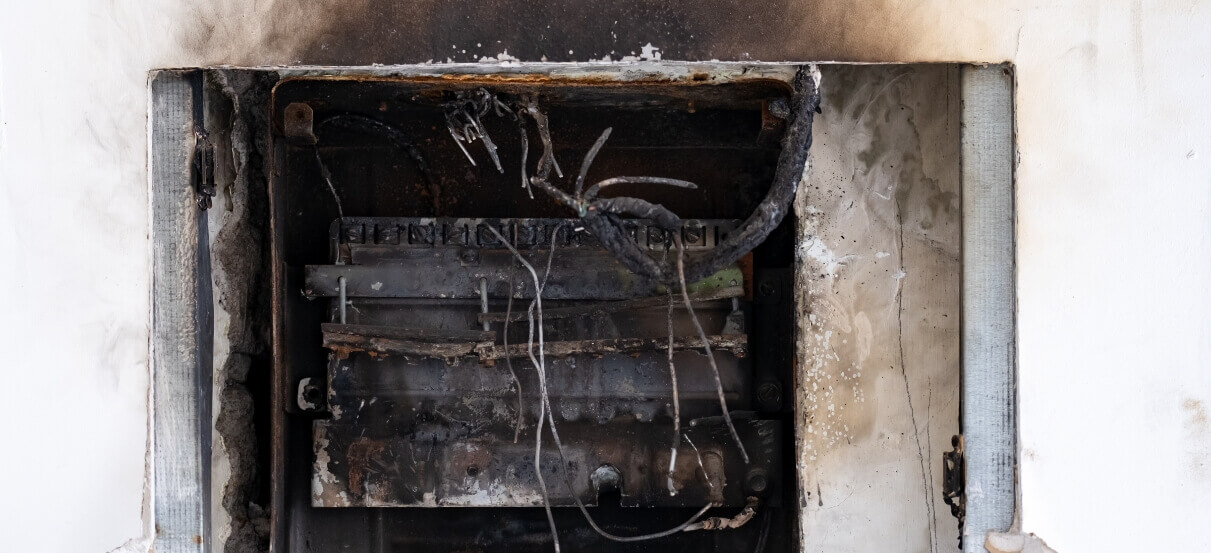
Lightning strikes affect objects in different forms and generally, they can be classified as follows.
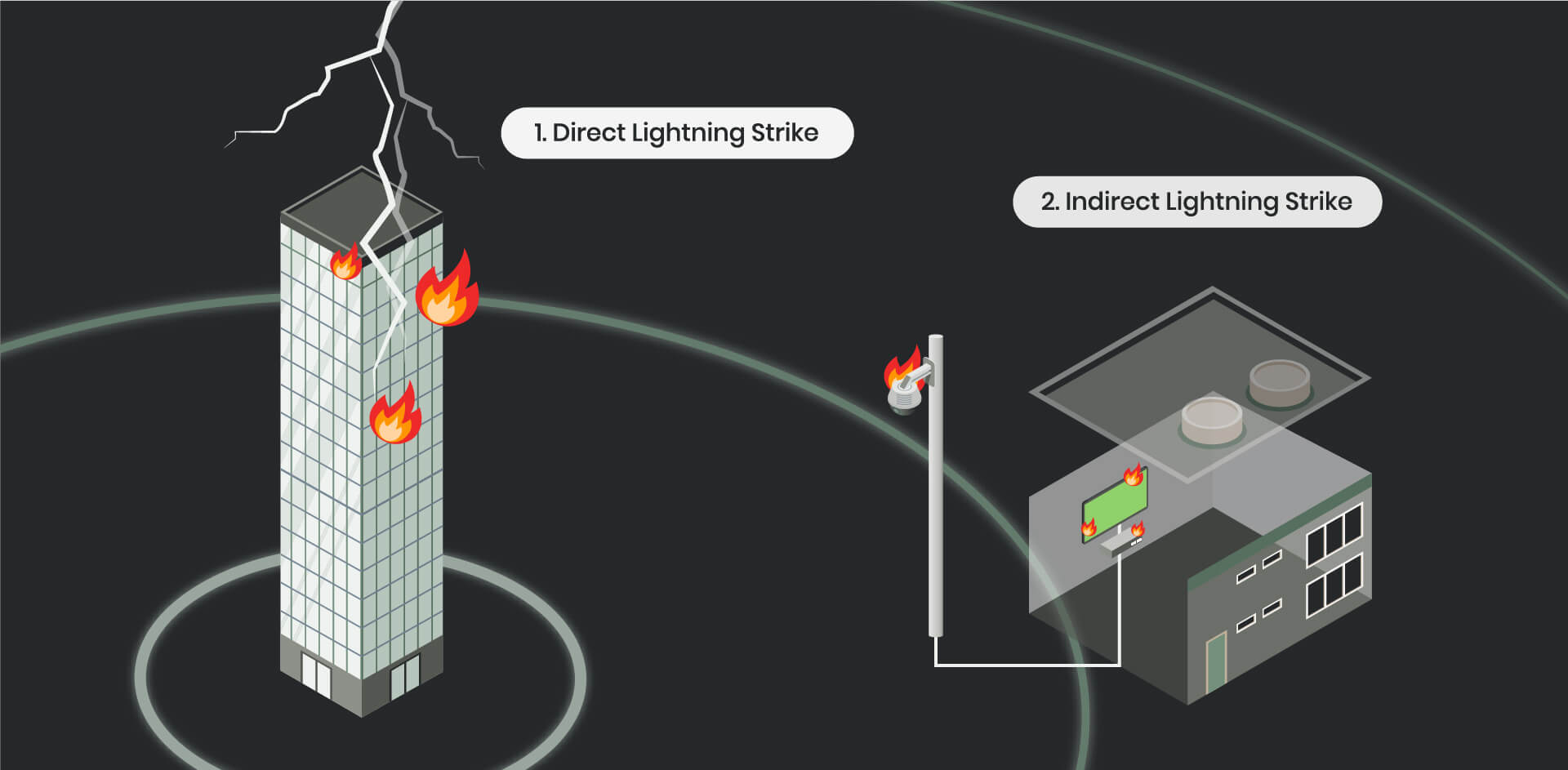
A direct lightning strike occurs when lightning energy is directed through an object like a human body. a building, and equipment...etc. It typically comes with heating, chemical, and magnetic effects that result in object breakage and even fatalities. Fortunately, it rarely happens.
An indirect lightning strike is the most common phenomenon that affects our life. It happens when lightning strikes an object that seeks a path to pass electromagnetic pulse energy to the second object. Through mediums like the air, cables, and more, the energy will travel to the electronics and eventually damage them by over-voltage and power surges.
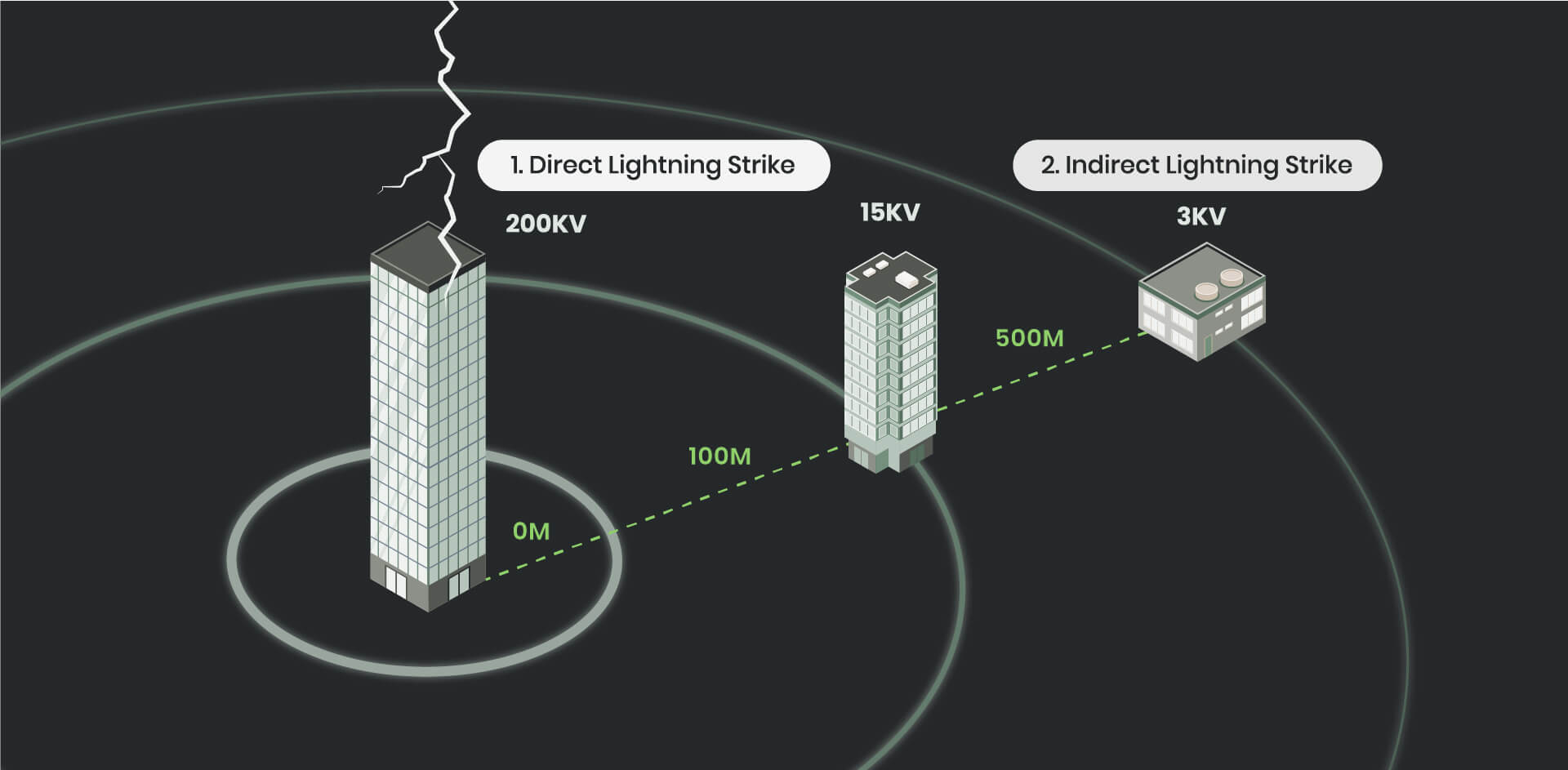
A 200kV lightning strike will typically affect objects in the range of 500M, which is almost five times as large as a football field. Due to the wide coverage, most cases of electronics being damaged are caused by indirect lightning strikes.
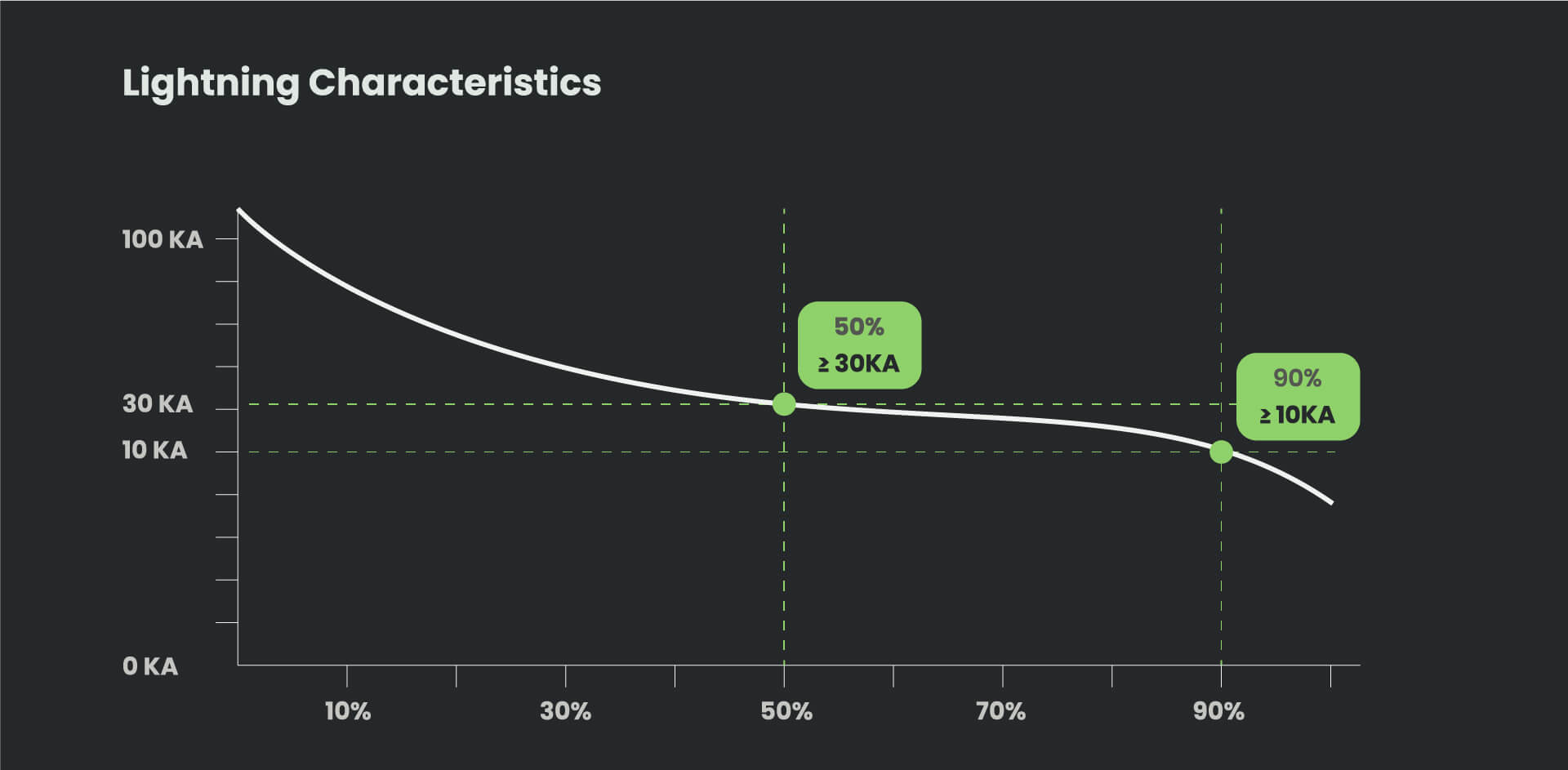
Many perceive that lightning strikes produce 50k to 250kA and 50k to 5000k volts. About 90% of them exceed 10kA and around half of the 90% over 30kV. However, the power for household use is only 120V and 15A.
Although there's no mature technology to completely protect electronics from lightning strikes now, we can still filter out low-energy surges using surge-protecting components. Let's take a look at what the components are and how they can deal with the surges.
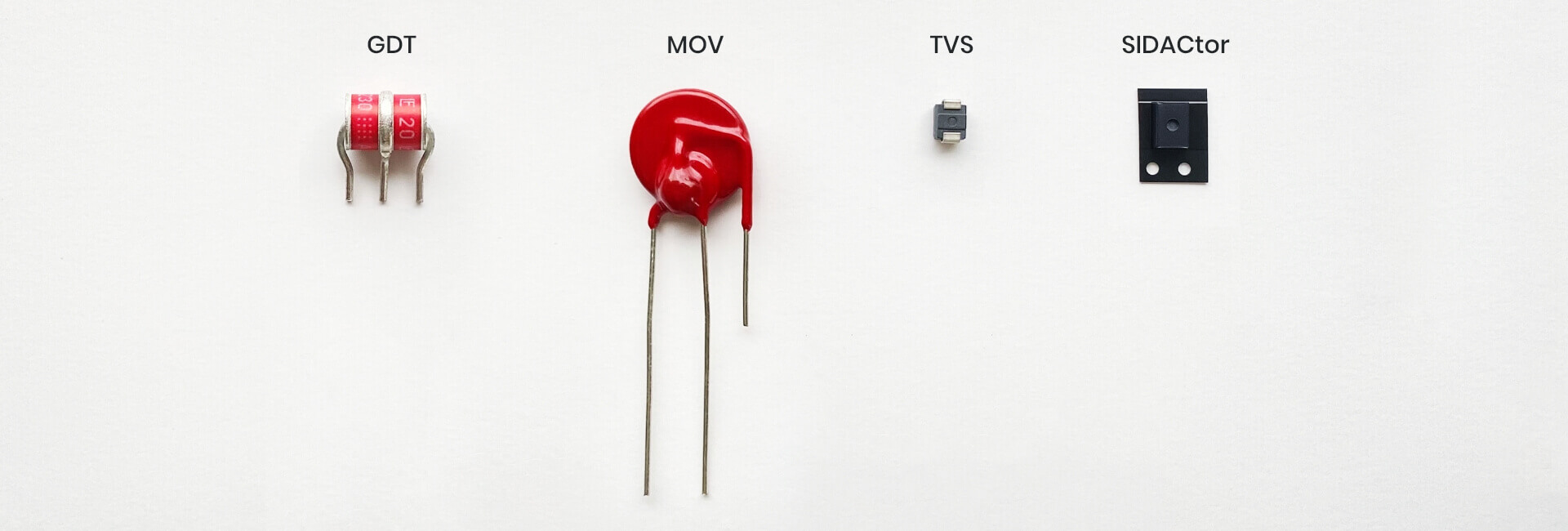
As mentioned, each protecting component has its pros and cons. SC&T, therefore, combines different protecting units to take advantage of them for different purposes of use.





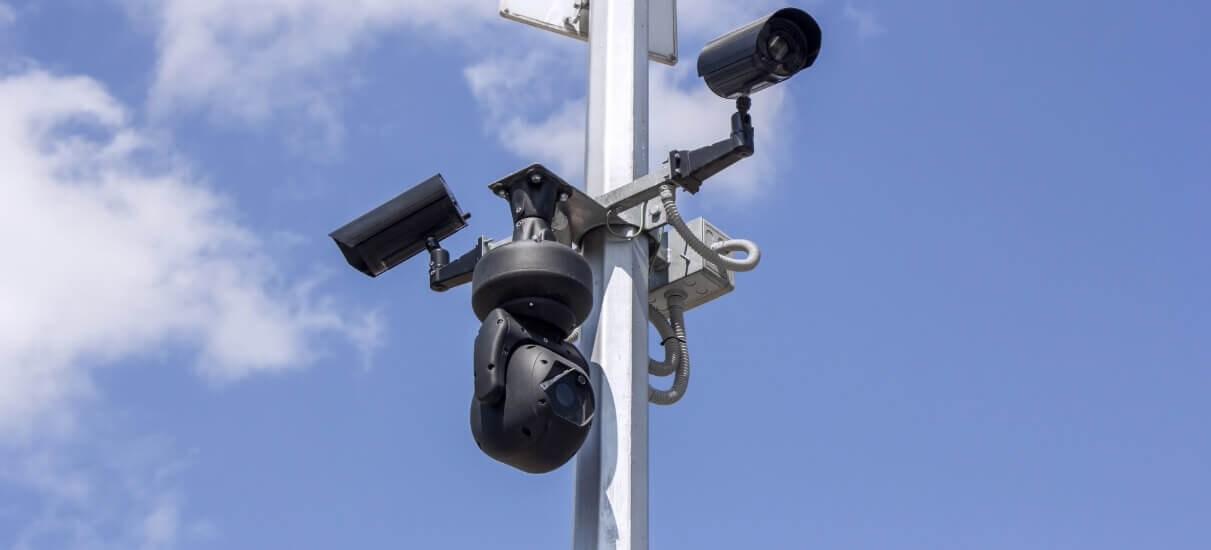
Taking CCTV application as an example, surge protections should be on both camera and DVR. Since electrical conductivity will affect all devices on the same line/ cable, each device should be protected by a surge protector for its best outcome.
Moreover, different protecting components have different purposes of use. If you use an IP surge protector on a PoE device, it will result that power can't be properly delivered or received by the PSE/ PD. Therefore, selecting a dedicated signal for a specific device is also important.
After-sales service is a critical factor to determine a customer's willingness to purchase one's services/ products. Given that, system integrators will typically warrant their services to be trouble-free in a given period of time. In this case, using surge protectors should be greatly taken into account to keep the devices durable and firmly.
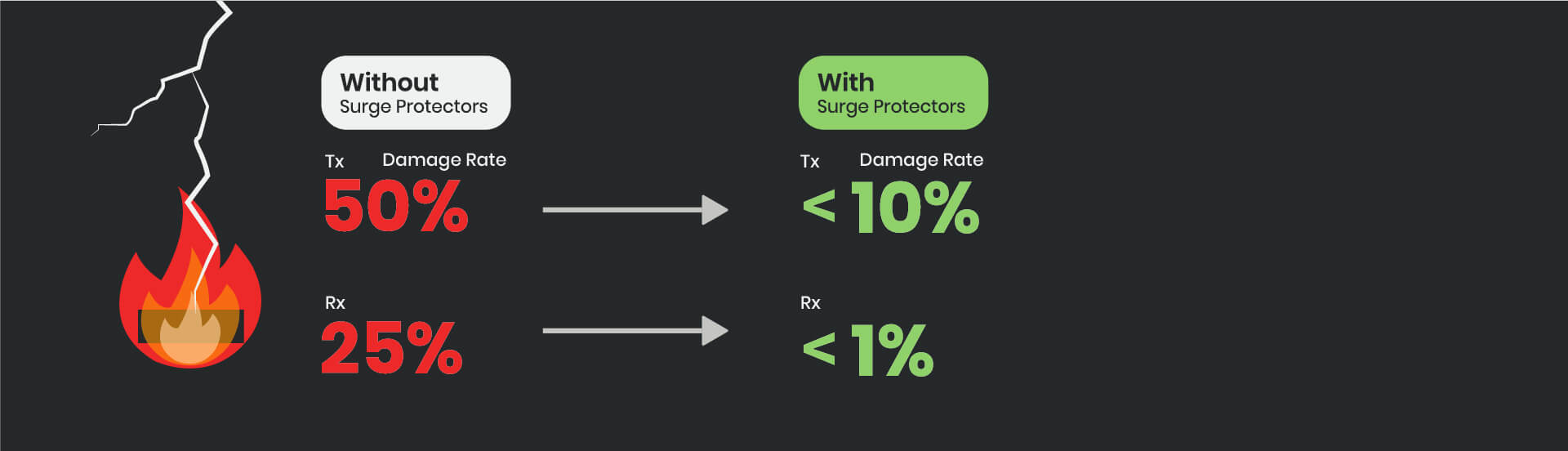
Here's a real case. a system integrator used PoE extenders to apply in 100+ PoE cameras in a CCTV system. The Tx units of the extenders were installed outdoor and the Rx units settled in a data center. Unfortunately, lightning strikes badly hit the area and destroyed about 50% of Tx units and 25% of RX units, which results in enormous financial loss.
To address the issue, they decided to use our surge protectors and found them worked perfectly. The damage rate decreased from 50% to 10% for Tx units and 25% to 1% for Rx units in 2 solid years. This improvement saved not only the money loss but also a great amount of time to maintain.
Copyright © SC&T. All rights reserved. No part of this website may be reproduced or distributed without prior written permission.
A USB device may work normally when connected directly to a computer but stop working after a USB extender or KVM system is added.
AV requirements in a medical simulation center go beyond recording a training session. In addition to room camera feeds and audio, a session may require recording patient vital signs, ultrasound images, or displays from other equipment. Some content may need to be sent to a control room or observation area for live viewing and later used during debriefing.
PoE, PoE+, and PoE++ all carry network data and DC power over an Ethernet cable. The main difference is the amount of power they can deliver. Basic PoE works for many low-power devices, such as IP phones and some PoE IP cameras. PoE+ provides more power and is commonly used for PTZ cameras and wireless access points. PoE++ uses IEEE 802.3bt Type 3 or Type 4 to power network devices with higher power requirements.

1. All specifications are subject to change without notice.
2. Brand and product names mentioned are trademarks of their respective companies.
3. The terms HDMI, HDMI High-Definition Multimedia Interface, HDMI Trade dress and the HDMI Logos are trademarks or registered trademarks of HDMI Licensing Administrator, Inc.


